In a rapidly evolving global economy, dematerialization is transforming how value is created and delivered. This evolution promises growth with fewer physical inputs, offering both environmental relief and economic opportunity.
Understanding Dematerialization
At its core, dematerialization is the shift toward digital or service-based equivalents, doing more with less by reducing material and energy use. It envisions sustained economic growth decoupled from resource consumption.
Experts distinguish two forms of decoupling:
- Relative decoupling: resource use rises slower than GDP
- Absolute decoupling: the economy grows while resource use plateaus or falls
Together, these trends enable societies to expand productivity without exhausting natural capital.
Environmental and Resource Advantages
Evidence from advanced economies shows clear signs of a “peak stuff” phenomenon. Total consumption of key materials has declined even as GDP climbed.
Notable examples include U.S. paper and timber use, now 20–40% below peak levels, and rising food production with less land and fertilizer. Air pollution has plummeted at lower societal costs than projected decades ago.
- Reduced demand for raw materials, transportation, and energy
- Conserved ecosystems and biodiversity
- Alleviated pressure on forests, mines, and the climate
While rebound effects—where efficiency gains spur additional consumption—remain a concern, the net impact in wealthy nations has so far been emissions-negative.
Business and Economic Gains
Companies at the forefront of dematerialization report significant competitive advantages. Digital offerings cost less to scale, often delivering higher margins and new revenue streams.
Key drivers include cloud computing, digital platforms, and subscription models.
- Digital offerings cost less to scale, eliminating inventory and distribution overhead
- Streaming services generate recurring revenue with minimal production waste
- Software-as-a-Service removes the need for boxed products and physical logistics
Surveyed front-runners cite increased agility, faster innovation cycles, and the prospect of fully remote operations by 2030, drastically cutting real estate and commuting expenses.
Quantifying the Impact: Data and Metrics
Recent studies link digital infrastructure to measurable GDP gains. A 10% rise in fixed-broadband penetration correlates with a 1.59% increase in GDP per capita.
Mobile-broadband expansions yield even larger effects in lower-income regions, boosting per-capita GDP by up to 3.02%.
Global digital transformation spending reached $1.85 trillion in 2022 and is projected to hit $2.8 trillion by 2025. E-commerce sales surged nearly 60% from 2016 to 2022 across major economies.
Challenges and Strategic Responses
Despite its promise, dematerialization raises economic and social concerns. Reduced demand for physical goods can threaten industries and employment.
Cultural attachment to consumption, especially in affluent societies, complicates behavior change. Sector-specific hurdles—like material-intensive fashion and construction—demand innovative solutions such as 3D-printed textiles and modular building.
Policymakers and businesses can navigate these challenges by:
- Implementing gradual lifestyle and consumption shifts to ease transitions
- Investing in workforce retraining for digital and service-oriented roles
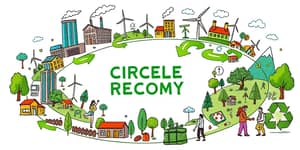
- Encouraging circular economy models to minimize waste
Implementing Dematerialization in Practice
Organizations and individuals can take concrete steps to embrace a less-physical paradigm:
- Conduct a material footprint audit and set reduction targets
- Migrate legacy operations to cloud-based and SaaS solutions
- Adopt virtual collaboration tools to minimize business travel
- Offer service-based models—such as equipment sharing or pay-per-use
At the consumer level, swapping paper statements for digital bills, streaming media instead of buying discs, and participating in online services can multiply resource savings.
Looking Ahead: A Virtualized Economy
By mid-century, a predominantly virtualized global economy is within reach. Data-driven services will replace many commodities, and most information exchange will occur online.
A dematerialized future promises prosperity driven by innovation, efficiency, and sustainability rather than mass production. As businesses, governments, and citizens unite around this vision, the benefits multiply—ensuring economic vitality while preserving our planet for generations to come.
References
- https://erickimphotography.com/dematerialization-a-multi-dimensional-overview/
- https://www.publicsphereproject.org/content/dematerialization-0
- https://www.mckinsey.com/capabilities/tech-and-ai/our-insights/the-economic-potential-of-generative-ai-the-next-productivity-frontier
- https://hbr.org/podcast/2019/09/dematerialization-and-what-it-means-for-the-economy-and-climate-change
- https://www.worldbank.org/en/topic/digital/overview
- https://utopia.org/guide/dematerialization-definition-and-sustainability/
- https://unctad.org/publication/digital-economy-report-2024
- http://www.ejolt.org/2015/09/dematerialization/
- https://www.statista.com/topics/6778/digital-transformation/
- https://lifestyle.sustainability-directory.com/area/dematerialization/
- https://www.oecd.org/en/topics/policy-issues/digital-transformation.html
- https://econation.one/dematerialisation/
- https://quixy.com/blog/top-digital-transformation-statistics-trends/
- https://dl.acm.org/doi/fullHtml/10.1145/3508072.3508129