The circular economy represents a paradigm shift from linear consumption to a regenerative model where every resource retains value. In this article, we explore how businesses, communities, and governments can leverage sustainable growth models to reduce waste, cut costs, and unlock new streams of revenue while protecting our planet.
Core Definition & Concept
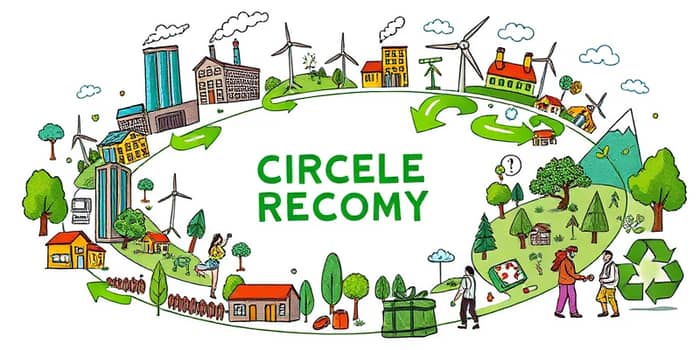
At its heart, the circular economy is a systemic economic model replacing linear patterns of take-make-dispose with strategies that keep materials and products in constant use. It creates closed-loop system where nothing goes to waste and focuses on restoration rather than extraction.
Unlike the traditional approach, this model is a fully regenerative waste-free system that designs out pollution and aims for continuous reuse.
- Design out waste and pollution: Prevent environmental harm at the source by choosing safer materials and processes.
- Keep products and materials in use: Extend product life through reuse, repair, refurbishment, remanufacturing, and recycling.
- Regenerate natural systems: Invest in practices like regenerative agriculture, composting, and water regeneration to restore ecosystems.
Why the Circular Economy Matters Now
Global dynamics are driving urgency for circular strategies. Rapid population growth and increasing consumption strain finite resources. By 2050, the world population is expected to reach 9.8 billion, intensifying demand for metals, minerals, and fossil fuels.
Circular models can alleviate these pressures by reducing greenhouse gas emissions by up to 39% across sectors and enhancing supply chain stability. Public policy also supports this transition, with the EU, OECD, and UNEP integrating circular economy principles into climate and industrial strategies.
- Resource scarcity: Finite materials face depletion risks under current extraction rates.
- Climate change mitigation: Circular solutions cut emissions from production, use, and disposal.
- Supply chain resilience: Local loops and recycled inputs reduce exposure to geopolitical risks.
- Policy incentives: Governments worldwide are offering funding and regulations favoring circular models.
Environmental Benefits
Transitioning to a circular economy delivers profound environmental improvements. It dramatically lowers waste sent to landfills and oceans, curbs plastic pollution, and prevents harmful substances from harming ecosystems.
By using recycled composites and biobased alternatives, companies can reduce reliance on virgin materials by as much as 90%. More efficient designs also cut energy use in extraction and manufacturing, driving down greenhouse gas emissions.
Furthermore, circular agriculture methods—from grasscycling to organic waste composting—restore soil health, foster biodiversity, and bolster ecosystem resilience.
Economic Benefits & Profitability
Beyond environmental gains, circular models deliver strong economic advantages. Businesses can realize cost savings on raw materials and waste disposal, with projected benefits of up to $640 billion by 2050 as resource inputs shrink and reuse increases.
Moreover, product-as-a-service and sharing platforms unlock new revenue streams. Leasing, subscription, and refurbishment services cater to consumer demand for affordability and access over ownership.
Analysts estimate the circular transition could create 700,000 jobs in the EU by 2030 in sectors like recycling, repair, and sustainable design. This expansion bolsters local economies and reduces dependency on critical imports such as rare earth elements.
Social Benefits
Communities also reap rewards from circular models. Cleaner urban environments and reduced pollution enhance public health and quality of life. Local repair cafes and urban farming initiatives foster social cohesion, empower residents, and generate grassroots economic opportunities.
Consumers benefit through access to durable, affordable products. Refurbished electronics, clothing rental, and sharing services offer high-quality goods at lower costs while reducing the environmental footprint of consumption.
Circular Business Models
Several distinct models guide circular innovation, each unlocking sustainable value creation:
- Circular inputs: Use recycled or renewable materials to replace virgin resources. Examples
- Sharing economy: Optimize asset utilization by facilitating shared use of equipment, vehicles, and tools.
- Product-as-a-service (PaaS): Sell the function of a product rather than ownership, retaining responsibility for maintenance and end-of-life recovery.
- Product life extension: Design for durability and repair to enable refurbishment and resale, exemplified by Patagonia’s repair program and Apple’s certified refurbished devices.
- Resource recovery: Harvest valuable materials from waste streams, as seen in TerraCycle’s cigarette waste program and Urban Mining Co’s rare earth recycling.
Real-World Examples
Globechain operates a B2B reuse marketplace, matching surplus office and hotel assets with new users. Circos offers subscription-based baby clothing rental, returning and cleaning garments to maintain value and reduce textile waste.
Philips’s Refurbished Systems allow hospitals to trade in old medical equipment for discounts, extending product lifespans and making critical technologies more accessible. Re-Tek in Europe collects IT hardware, remarketing 80% of items and diverting 99% from landfills.
Fashion giant H&M partners with I:CO to collect used clothing in stores, sorting items for resale, reuse in cleaning rags, or recycling into insulation. IKEA’s buyback and rental programs further demonstrate how furniture can circulate rather than be discarded.
Key Statistics & Numbers
These figures illustrate the transformative power of circular strategies. Companies can capture significant value while contributing to global sustainability goals.
In a world facing resource constraints, climate risks, and social challenges, the circular economy offers a compelling blueprint for resilient, profitable, and ethical growth. By designing products that last, sharing what we own, and recovering resources from waste, we can forge business models that serve people and planet alike.
Embracing circularity is not just an environmental imperative—it is a strategic opportunity. Forward-thinking organizations that integrate these principles today will thrive in tomorrow’s economy, unlocking innovation, safeguarding resources, and forging deeper connections with customers and communities.
References
- https://www.rts.com/blog/benefits-of-circular-economy/
- https://www.boardofinnovation.com/blog/circular-business-model-examples/
- https://www.immerse.education/beyond-syllabus/economics/what-is-the-circular-economy-definition-benefits/
- https://www.okonrecycling.com/consumer-recycling-initiatives/learn-about-recycling/circular-economy-business-models/
- https://gaiacompany.io/benefits-of-a-circular-economy/
- https://www.ube.ac.uk/whats-happening/articles/circular-business-model/
- https://www.wastemanaged.co.uk/our-news/recycling/circular-economy-guide/
- https://www.weforum.org/stories/2022/01/5-circular-economy-business-models-competitive-advantage/
- https://www.europarl.europa.eu/topics/en/article/20151201STO05603/circular-economy-definition-importance-and-benefits
- https://www.oecd.org/en/publications/business-models-for-the-circular-economy_g2g9dd62-en.html
- https://www.ube.ac.uk/whats-happening/articles/circular-economy/
- https://www.ellenmacarthurfoundation.org/topics/circular-economy-introduction/overview
- https://hbr.org/2021/07/the-circular-business-model
- https://www.weforum.org/stories/2025/09/circular-economy-built-environment-future/
- https://www.ellenmacarthurfoundation.org/topics/circular-economy-introduction/examples
- https://www.unepfi.org/pollution-and-circular-economy/circular-economy/
- https://sustainabilitymag.com/top10/top-10-brands-embracing-the-circular-economy-in-2023