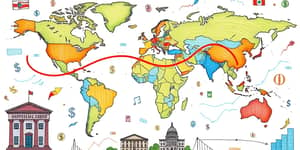

In an era marked by unprecedented uncertainty, investors must sharpen their focus on emerging threats and adopt strategies to protect and grow their portfolios. This comprehensive guide explores the multifaceted risks shaping the global economy in 2025 and beyond, offering clear insights and actionable recommendations.
Slowing Global Growth: Navigating a Subdued Outlook
The latest forecasts paint a sobering picture. With projected growth ranging from 2.3% to 2.7%, the global economy faces a prolonged period of sluggish growth that falls short of recovering from pandemic-era shocks.
Advanced economies are wrestling with structural headwinds, while emerging markets exhibit divergent trajectories. Regions such as East Asia and Europe may experience a pullback, whereas Latin America, South Asia, and Sub-Saharan Africa could see moderate rebounds driven by strong domestic demand. Investors should remain vigilant, recognizing that growth below 2.5% often signals recessionary pressures.
Trade Policy and Geoeconomic Fragmentation
Protectionism is on the rise, with effective tariff rates at their highest in a century. This surge in barriers fuels market unpredictability and disrupts established supply chains. Trade wars and shifting regulations heighten the probability of tighter financial conditions, compromising both short- and long-term prospects.
A key barometer, the Economic Policy Uncertainty Index, reached record levels in early 2025, reflecting widespread investor anxiety. Amid this backdrop, businesses must diversify supply sources and engage in robust scenario planning to mitigate shocks from sudden policy reversals.
Inflation and Monetary Policy Divergence
Inflationary pressures are expected to ease from 4.5% to 3.5% in 2025, but the path remains uneven across regions. Advanced economies are on course to restore price stability faster, while many emerging markets face the prospect of further tightening or strategic easing to avoid deflationary traps, as seen in China.
This desynchronized monetary policy environment amplifies volatility in currency markets and cross-border capital flows. Investors should hedge currency risks and maintain flexible allocations, adapting swiftly to central bank decisions and the evolving yield landscape.
Geopolitical Risks and Conflict Escalation
The global stage is more fractured than at any point since the Cold War. Heightened tensions—from territorial disputes to proxy conflicts—threaten to spook markets and disrupt trade. A majority of experts view the next decade as "stormy or turbulent," raising the stakes for portfolios exposed to geopolitically sensitive sectors.
Even minor miscalculations between major powers could trigger sharp market reactions. Incorporating geopolitical risk analysis and stress testing investments against scenarios of escalation can help safeguard assets.
Fragile Financial Systems and Debt Vulnerabilities
Financial markets have already exhibited sharp corrections in 2025, underlined by the US stock market's fear index hitting its third-highest level on record. This turbulence is driven by overlapping risks—policy surprises, geopolitical shocks, and lingering pandemic effects.
Meanwhile, elevated borrowing costs and subdued growth raise the specter of debt crises, particularly in emerging economies. A proactive approach involves monitoring sovereign and corporate debt ratios, engaging in rigorous credit analysis, and avoiding overexposure to high-leverage borrowers.
Climate Change and Environmental Shocks
Extreme weather events—floods, droughts, hurricanes—are growing more frequent and severe, undermining infrastructure, supply chains, and food security. Investors must confront intensifying climate risks by integrating environmental assessments into due diligence.
Allocating capital to sustainable initiatives and climate-resilient assets, such as green bonds and infrastructure funds, can both mitigate risk and capture opportunities in the transition to a low-carbon economy.
Societal and Technological Disruption
Societal polarization and the rapid spread of misinformation erode trust in institutions and markets. Meanwhile, demographic shifts—aging populations in advanced economies and youth bulges in emerging markets—create labor mismatches and structural growth constraints.
Technological innovation offers solutions but also introduces vulnerabilities, from cyberattacks to automated trading shocks. Adopting a balanced perspective, investors should incorporate both social and technological factors into risk models and seek exposure to companies leading in workforce development and cybersecurity.
Recommendations: Building Resilience for the Future
To navigate this complex landscape, investors must embrace proactive strategies that enhance portfolio resilience. Key actions include:
- Promote stable trade policies and regional diversification to offset supply chain disruptions.
- Manage debt exposure through rigorous credit screening and dynamic risk limits.
- Integrate climate risk metrics and allocate to sustainable assets for long-term stability.
- Hedge currency and interest rate risks amid monetary policy divergence.
- Stress test portfolios for geopolitical scenarios and societal disruptions.
By taking these steps, investors can position their portfolios to withstand near-term shocks and capitalize on emerging trends. In a world where uncertainty is the only certainty, disciplined risk management and strategic vision are vital.
Ultimately, the ability to adapt and respond decisively will distinguish successful investors. Embrace a holistic framework that integrates economic, environmental, and social dimensions, and you will be well prepared to navigate the challenges—and seize the opportunities—that lie ahead.
References
- https://www.weforum.org/publications/global-risks-report-2025/
- https://www.imf.org/en/Publications/WEO/Issues/2025/04/22/world-economic-outlook-april-2025
- https://www.worldbank.org/en/publication/global-economic-prospects
- https://www.weforum.org/publications/global-risks-report-2025/digest/
- https://unctad.org/publication/trade-and-development-foresights-2025-under-pressure-uncertainty-reshapes-global
- https://www.ey.com/en_us/insights/strategy/global-economic-outlook
- https://www.congress.gov/bill/118th-congress/house-bill/2670/text