As the planet warms, the decisions we make today will echo through decades of economic history. From boardrooms to parliaments, stakeholders grapple with competing priorities, yet the stakes are clear. Without decisive action, the world faces unprecedented economic risk to global stability and profound social upheaval. Understanding the costs of inaction and the benefits of investment is essential for forging a sustainable future.
High Cost of Inaction
Recent research paints a stark picture: if global warming reaches 3°C by 2100, cumulative output could shrink by 15% to 34%. In contrast, investing 1% to 2% of global GDP in mitigation and adaptation measures would cap damages at just 2% to 4%. The gulf between action and inaction is equivalent to 11% to 27% of cumulative GDP—comparable to three times global healthcare spending.
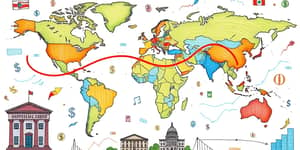
The Swiss Re Institute’s Climate Economics Index breaks down 2050 projections under varying scenarios. These impacts will be uneven, with Asian economies hit hardest and wealthier nations also bearing substantial losses.
- Below 2°C increase: 4% GDP reduction
- 2°C increase: 11% GDP reduction
- 2.6°C increase: 14% GDP reduction
- 3.2°C increase: 18% GDP reduction
Bridging the Climate Finance Gap
At COP29, developed nations pledged to boost annual climate finance from $100 billion to $300 billion by 2035. Yet, experts estimate $1.3 trillion is required each year to support mitigation and adaptation in vulnerable regions. This shortfall is not merely a financial hurdle but a matter of equity and resource-constrained vulnerable communities least equipped to adapt.
Addressing the funding gap demands innovative financing mechanisms: green bonds, public–private partnerships, and debt-for-climate swaps. Closing this gap represents an investment in resilience, health, and social stability for the communities facing the brunt of climate impacts.
Political Crossroads and Policy Continuity
The year 2025 marks a turning point amid shifting global leadership and domestic electoral cycles. In the United States, proposed policy reversals threaten to undermine climate cooperation and political uncertainties threaten policy continuity worldwide. Similar dynamics are at play in Europe, where industrial decarbonization initiatives risk disruption if financial support falters.
Securing enduring policies requires coalition-building across party lines and robust legal frameworks that outlast electoral terms. Only through long-term commitments can nations sustain the momentum needed for deep decarbonization.
Public Perception and Building Consensus
Public opinion on climate policies remains divided. In the U.S., roughly a third of citizens each believe such measures help the economy, harm it, or make no difference. Environmental benefits are viewed more positively, with a majority recognizing positive impacts. Yet a significant partisan divide on climate policy perceptions persists, complicating efforts to enact comprehensive reforms.
Bridging this divide hinges on transparent communication of costs and benefits, local success stories, and aligning climate action with economic opportunity. When citizens see tangible improvements—clean energy jobs, lower energy bills, healthier communities—support for bold policies strengthens.
Charting a Path Forward: Opportunities and Recommendations
Despite challenges, the transition to a low-carbon economy offers pathways to innovation and growth. The IMF and other global institutions recommend policies that boost labor participation, integrate migrants, and address skill gaps. A stable and predictable trade environment is vital to reduce uncertainty and attract investment in clean technologies.
- Promote healthy aging and increase workforce participation among seniors and women.
- Enhance skill development programs for emerging green sectors.
- Design trade agreements that support environmental standards and technology transfer.
- Encourage corporate accountability through transparent reporting and climate risk assessments.
By aligning economic incentives with environmental stewardship, governments and businesses can unlock new markets, create jobs, and foster resiliency. Advancements in renewable energy, battery storage, and sustainable agriculture illustrate how technological advances and corporate accountability drive progress toward a thriving, low-carbon world.
Ultimately, navigating the economic consequences of global climate policies demands collective global climate responsibility. Leaders must seize this moment to chart a course that safeguards prosperity for current and future generations. The choice is clear: invest today to reap lasting economic and social benefits, or face mounting costs that will reverberate across economies and communities for centuries.
References
- https://www.americanprogress.org/article/project-2025-would-jeopardize-global-climate-action/
- https://www.imf.org/en/Publications/WEO/Issues/2025/04/22/world-economic-outlook-april-2025
- https://www.wri.org/insights/climate-finance-progress-2025
- https://gca.org/what-to-expect-in-climate-change-in-2025-opportunities-amid-challenges/
- https://www.gatescambridge.org/about/news/the-huge-economic-impact-of-inaction-on-climate-change/
- https://www.weforum.org/stories/2021/06/impact-climate-change-global-gdp/
- https://www.oxfordeconomics.com/resource/key-climate-and-sustainability-themes-for-2025/
- https://www.pewresearch.org/science/2024/12/09/how-americans-view-climate-change-and-policies-to-address-the-issue/