
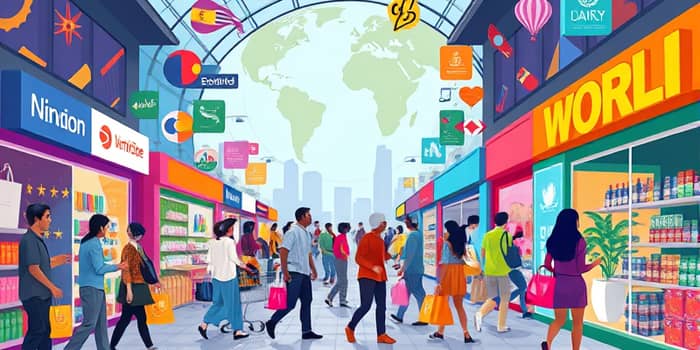
In recent years, the expansion of the global consumer class has become one of the most significant economic forces shaping societies and industries across the world. As millions join the ranks of middle-income and affluent individuals, their collective spending habits redefine markets, influence supply chains, and spur innovation in unexpected ways. Understanding this transformation is crucial for businesses, policymakers, and communities seeking to harness the opportunities and navigate the risks of a consumer-driven economy.
Demographics and Global Expansion of the Consumer Class
By 2025, an estimated 106 million new individuals will have joined the global consumer class, despite headwinds such as inflation and geopolitical disruptions. This growth, though 10 million fewer entrants than earlier forecasts, underscores the resilience of emerging economies.
The global middle and affluent classes now number 4.4 billion, outpacing the 3.6 billion who remain below the poverty line. For the first time, the global middle class has surpassed four billion people, spending over $60 trillion annually. Forecasts indicate this figure will swell to 5.7 billion by 2035 out of an anticipated 8.7 billion global population.
This demographic shift from barebones survival to discretionary consumption is a watershed moment. As incomes rise in regions like Asia, Africa, and Latin America, consumer preferences evolve rapidly, shifting spending from essentials to technology, leisure, and luxury products.
Economic Impact: Spending Trends and Data by Region
Consumer spending remains the backbone of global GDP growth, but its pace and distribution have shifted significantly post-pandemic. Worldwide, consumer spending is expected to rise by 2.3% in 2025, reflecting both recovery momentum and persistent challenges such as supply constraints and inflationary pressures.
In the United States, personal consumption expenditure is projected at $16.5 trillion in 2025, with an average annual growth rate of 3.9% between 2020 and 2025. After a robust 8.8% rebound in 2021, growth moderated to 3.0% in 2022 and 2.5% in subsequent years, underscoring the balancing act between consumer demand and economic constraints.
Even with a trillion-dollar shortfall from previous forecasts, aggregate global household spending will still climb by $2 trillion in nominal terms, reflecting the enduring strength of consumer demand across diverse markets.
Generational Drivers of Growth: Gen X, Millennials, and Gen Z
Generational cohorts shape consumption trends in distinct ways. Gen X, currently aged 45 to 60, leads all groups with spending amounting to $15.2 trillion globally. This cohort’s purchasing power stems from peak career earnings, established households, and discretionary budgets for travel, home improvement, and healthcare.
Millennials and Gen Z, now entering peak earning years, drive the fastest monthly spending growth, averaging a 5.9% increase in recent surveys. Their consumption is characterized by a preference for digital channels, ethical brands, and experiences over material goods. This cohort’s unique blend of digital savviness and social consciousness presents both challenges and opportunities for businesses.
Urbanization and shifting household structures further influence how and where these generations spend, with emerging markets witnessing rapid adoption of e-commerce and mobile payments.
The New Value Equation: Behavioral Shifts and Strategies
- Value seeking is universal: 79% of global consumers actively hunt for deals on every purchase, using promotions, loyalty programs, and online price comparisons.
- Delayed discretionary purchases: Nearly half of Americans plan to postpone big-ticket spending, reflecting cautious optimism amid economic uncertainties.
- Cross-category trade-offs are rising as households reallocate budgets based on perceived value and price pressures.
- Brand loyalty is under pressure as consumers switch to private labels and value-oriented alternatives when core brands fail to meet expectations.
For businesses, these trends demand agile pricing strategies, transparent communications, and seamless omnichannel experiences to retain consumer trust and market share.
Major Challenges: Macroeconomic Risks and Policy Impacts
Inflation continues to be the primary concern for consumers globally, outranking environmental worries and geopolitical conflicts. Persistent price increases force households to adjust budgets, squeezing discretionary categories such as apparel and leisure.
Trade disruptions, tariffs, and monetary tightening shape the cost and availability of goods, while strong labor markets provide some cushion through robust employment levels. Yet wage growth lags behind spending, foreshadowing potential constraints in future consumption.
Rising delinquency rates on credit cards and auto loans signal that some consumer segments are approaching debt ceilings, highlighting the need for prudent lending and financial literacy initiatives.
Future Outlook: Harnessing Consumer Power for Economic and Social Change
Despite short-term volatility, long-term projections for the global consumer class remain optimistic. The rapid expansion of middle-income populations in developing regions fuels demand for healthcare, education, mobility, and digital services, laying the groundwork for sustained growth.
By 2035, over 5.7 billion people are expected to belong to the consumer class, driving investments in infrastructure, technology, and innovation. The interplay between consumer aspirations and business innovation will dictate the trajectory of world economies.
For policymakers, encouraging inclusive growth and mitigating inequality is critical to ensuring that consumer-driven prosperity benefits all. Investments in skills development, social safety nets, and sustainable infrastructure will be vital in supporting this vast demographic transition.
Conclusion
The rise of the global consumer is more than an economic phenomenon; it’s a transformative force reshaping societies on every continent. Understanding the complex interplay of demographics, spending patterns, generational preferences, and macroeconomic dynamics equips businesses and governments to navigate this new landscape effectively.
As consumer power continues to expand, those who embrace innovation, prioritize value, and foster inclusive growth will reap the greatest rewards. The global consumer class is not only powering economic change but also charting a course toward a more interconnected, dynamic, and prosperous future.
References
- https://www.weforum.org/stories/2025/07/against-the-odds-how-has-the-world-achieved-middle-class-dominance/
- https://www.ibisworld.com/united-states/bed/consumer-spending/363/
- https://www.jpmorgan.com/insights/global-research/economy/consumer-spending
- https://www.bea.gov/data/consumer-spending/main
- https://www.deloitte.com/us/en/insights/topics/economy/us-economic-forecast/united-states-outlook-analysis.html
- https://worldpopulationreview.com/country-rankings/consumer-spending-by-country
- https://www.emarketer.com/content/gen-x-leads-global-consumer-spending-2025
- https://www.mckinsey.com/industries/consumer-packaged-goods/our-insights/state-of-consumer