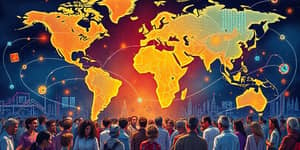
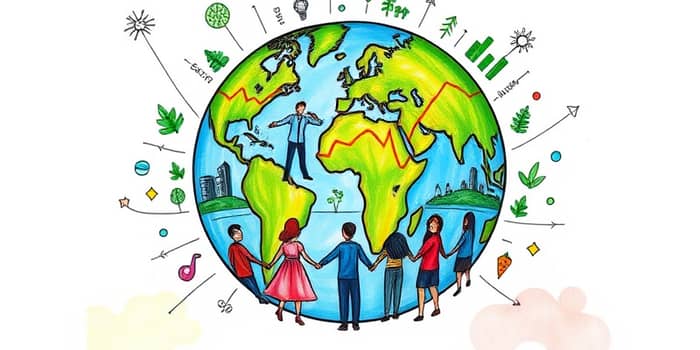
The global economy has historically been assessed by Gross Domestic Product, a single figure representing the value of goods and services produced within national borders. While GDP has grown from roughly USD 4.5 trillion fifty years ago to over USD 100 trillion today, it fails to capture the full complexity of human progress. Policymakers and civil societies around the world are now seeking more comprehensive measures of prosperity that incorporate social, environmental, and well-being factors alongside economic output.
GDP’s appeal lies in its simplicity and comparability. However, this measure treats all economic activities identically, regardless of whether they enhance societal welfare or create hidden costs. Indeed, actions like pollution cleanup or increased healthcare spending after a disaster boost GDP despite indicating deeper problems. As a result, the relentless focus on GDP growth has led to imbalanced development priorities and unintended side effects that undermine long-term sustainability.
The Origins and Shortcomings of GDP
GDP was formalized during the 1930s to track national output and guide wartime planning. Over time, it became the world’s default barometer for economic performance. Yet, in emphasizing aggregate production, GDP overlooks how national wealth is distributed and whether it contributes to actual well-being.
Consider these stark discrepancies:
- GDP growth masks rising income inequality across and within nations.
- Environmental degradation and resource depletion count as economic gains when addressing their consequences.
- Social cohesion, mental health, and community resilience remain absent from national accounts.
- Essential investments in unpaid care, volunteerism, and cultural heritage go unmeasured.
Without integrating these dimensions, policymakers risk making decisions that inflate short-term output at the expense of future generations.
Innovative Alternative Indicators
In response to GDP’s limitations, economists and institutions have developed a suite of metrics designed to quantify broader aspects of human and ecological well-being. These alternatives aim to align decision making with sustainable development goals and social equity.
Each metric brings unique insights. The Genuine Progress Indicator, for instance, adjusts personal consumption by adding the value of volunteer work and household labor, while subtracting the costs of crime, pollution, and resource depletion. The Human Development Index ranks countries by life expectancy, education attainment, and income per capita, thus capturing basic human capabilities.
The Ecological Footprint quantifies humanity’s demand on nature relative to planetary boundaries, expressed in global hectares. Meanwhile, the OECD’s Better Life Index allows citizens to weight dimensions like housing, community ties, governance, and life satisfaction according to personal values. Lastly, the Comprehensive Wealth approach aggregates five forms of capital—natural, human, financial, produced, and social—to assess long-term economic sustainability.
Policy and Institutional Momentum
The shift beyond GDP has gained traction among leading multilateral bodies. The European Union’s Environment Action Programmes explicitly call for sustainable and inclusive wellbeing metrics to complement traditional measures. Within the EU treaties themselves, the wellbeing of citizens is enshrined as a core goal under Article 3(1).
The OECD’s Centre on Well-being, Inclusion, Sustainability and Equal Opportunity (WISE) is spearheading efforts to mainstream these indicators into policymaking. Simultaneously, the United Nations convened a high-level expert group co-led by UNCTAD, DESA, and UNDP to propose standardized alternative measures.
One landmark development is the upcoming 2025 update to the UN System of National Accounts, which will integrate concepts such as digitalization, resource depletion, inequality, ethical economic behavior, and resilience into official reporting frameworks. This integration promises a more nuanced view of global economic health that aligns with sustainable development imperatives.
Current Trends and Implementation Challenges
Despite rising global GDP and a 150% increase in median incomes since 1985, the world faces persistent social and environmental crises. From spiraling inequality to accelerated biodiversity loss, traditional metrics fail to reflect these critical dynamics. Governments, cities, and civil society organizations are piloting new frameworks for budgeting, investment, and policy evaluation.
Yet, embedding new measures into national statistical systems and decision-making processes faces multiple hurdles:
- Subjectivity and lack of standardization: Reliance on survey data and qualitative assessments complicates cross-country comparisons.
- Data availability: Incomplete or inconsistent time series limit trend analyses for certain well-being dimensions.
- Political resistance: Shifting to metrics that reveal negative trends may face opposition from vested interests.
- Technical integration: Aligning alternative measures with existing account frameworks requires new methodologies and capacities.
Addressing these challenges will demand collaboration among statisticians, policymakers, and local communities to co-create indicators that are robust, transparent, and culturally relevant.
Looking Ahead: Building a Balanced Future
As momentum builds around alternatives to GDP, three key priorities emerge. First, establishing internationally recognized standards will enhance comparability and credibility. Second, investing in data infrastructure and capacity building will enable low- and middle-income countries to participate fully in these efforts. Third, fostering public engagement through interactive tools and participatory governance can democratize how societies define progress.
The path forward requires collective vision and interdisciplinary collaboration. Economists, ecologists, sociologists, and community leaders must unite around the common goal of balancing economic vitality with social equity and environmental stewardship. Only then can we ensure that growth translates into genuine human flourishing rather than an abstract figure on a balance sheet.
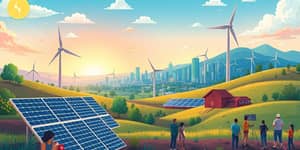
By moving beyond GDP, we can craft policies that preserve the planet, uplift marginalized communities, and nurture the intangible elements of a thriving society—trust, creativity, and shared purpose. In doing so, we create a legacy of prosperity that endures for generations to come.
References
- https://www.numberanalytics.com/blog/beyond-gdp-alternative-economic-indicators
- https://sustainableconsumption.usdn.org/initiatives-list/alternative-economic-indicators
- https://www.stlouisfed.org/open-vault/2023/apr/three-other-ways-to-measure-economic-health-beyond-gdp
- https://www.thebeyondlab.org/article/whats-next-on-beyond-gdp-2
- https://joint-research-centre.ec.europa.eu/projects-and-activities/beyond-gdp-delivering-sustainable-and-inclusive-wellbeing_en
- https://www.oecd.org/en/topics/policy-issues/well-being-and-beyond-gdp.html
- https://www.c40knowledgehub.org/s/article/Beyond-GDP-How-your-city-can-use-alternative-measures-of-social-environmental-and-economic-progress