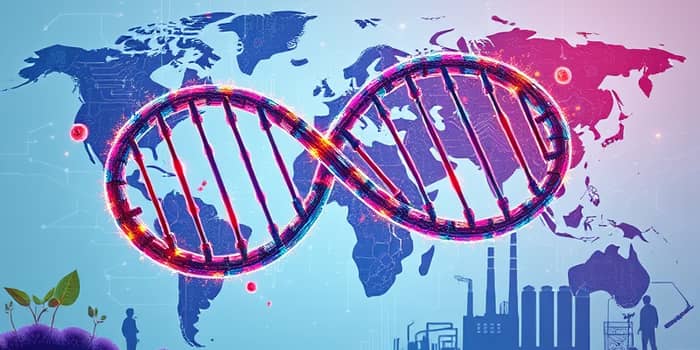
The world stands at the threshold of a profound transformation: the bio-revolution. This era, defined by the convergence of biotechnology, computing, and advanced manufacturing, is reshaping how we approach medicine, agriculture, industry, and sustainability. From programmable genetic circuits to large-scale biomanufacturing facilities, the bio-revolution promises not only to revolutionize global health but also to generate unprecedented economic value.
Across continents, scientists and entrepreneurs are harnessing biology becomes programmable like software models, leveraging gene editing, AI-driven design, and automation. What once took decades to achieve in laboratory settings can now be prototyped, tested, and iterated in weeks. As these innovations move from bench to market, they are spawning a new bio-based layer of the world economy.
Understanding the Pillars of Change
At its core, the bio-revolution rests on four interlocking pillars, each enabling transformative applications:
- Programmable biology – CRISPR, synthetic gene circuits, and AI-designed proteins let us rewrite the code of life.
- Biomanufacturing – cells, enzymes and microbes become efficient factories for drugs, materials, foods, and fuels.
- Bioconvergence – tight integration of biology with AI, robotics, and materials science accelerates discovery.
- Bioeconomy – a growing share of global output derives from biologically based processes and products.
Together, these pillars enable cells, enzymes and microbes as factories, blurring the lines between living systems and industrial operations. Governments and corporations are now investing billions to build the infrastructure and talent needed to scale these technologies.
Economic Footprint and Market Dynamics
The magnitude of this shift is reflected in market statistics. In 2023–2024, the global biotechnology market reached approximately USD 1.55 trillion, and forecasts put it at USD 1.74 trillion in 2025. Projections vary, with some analysts predicting USD 3.9 trillion by 2030, while others foresee values as high as USD 5.7 trillion by 2034, highlighting both uncertainty and immense opportunity.
Beyond direct market value, the advanced bioeconomy is projected to add up to USD 1 trillion in annual economic value by 2040, while reducing 3–4 gigatons of CO₂-equivalent emissions each year. In the United States alone, the broader bioscience sector generated over USD 3.2 trillion in economic output in 2023 and supported nearly 2.3 million direct jobs, with an additional 8 million roles indirectly enabled.
Regional dynamics underscore this trend. North America accounted for 37.4% of global biotech revenue in 2024, thanks to robust R&D and supportive policy. Meanwhile, Asia-Pacific, Latin America, and the Middle East are emerging as high-growth markets, driven by rising healthcare investment and favorable regulations.
Revolutionizing Global Health
One of the most compelling fronts of the bio-revolution is its impact on global health. From precision medicine to AI-augmented clinical trials, new tools are enabling treatments that are safer, more effective, and tailored to individual patients.
Precision medicine and personalized therapies lead the way. Fueled by genetic profiling, multi-omics analysis, and biomarker research, these approaches are poised to redefine care pathways for oncology, immunology, and neurology. AI algorithms can now match tumor genetics to optimal drug combinations, improving response rates while minimizing side effects.
- Genetic profiling and biomarker research
- AI tools for treatment matching
- Multi-omics and immunotherapy integration
- Customized protocols for chronic conditions
Gene editing platforms like CRISPR have matured beyond proof-of-concept, moving into clinical trials for cancer therapies and functional cures for genetic disorders such as sickle cell disease and cystic fibrosis. Similarly, mRNA technologies, proven by COVID-19 vaccines, are now advancing toward therapeutic vaccines for cancer and infectious diseases.
Regenerative medicine—encompassing stem cell therapies and tissue engineering—is also gaining traction. Genetic diagnostics and organ-on-chip models offer rapid, accurate assessments of disease risk and drug safety, reducing reliance on animal testing and shortening development timelines.
AI further accelerates progress in drug discovery and clinical development. Cloud analytics platforms report up to 40% faster project cycles, while machine learning enhances patient stratification, trial design, and real-time decision support. Digital twins of biological systems allow scientists to simulate outcomes before real-world deployment.
Beyond Health: Bioindustrial and Agricultural Transformation
The influence of the bio-revolution extends into industry and agriculture. Experts at the World Economic Forum estimate that by mid-century, as much as 60% of physical inputs to the global economy—textiles, packaging, fuels, plastics, and chemicals—could be produced biologically, ushering in a data-driven, AI-powered bioeconomic engine.
- Food and agriculture: alternative proteins, precision fermentation, and gene-edited crops
- Materials: bio-based plastics, fibers, specialty chemicals
- Environment: bioremediation, carbon capture, waste-to-value systems
This transforming economies and societies worldwide has profound implications. Cultivated meat and fermentation-derived ingredients promise sustainable protein sources, while biopesticides and biofertilizers aim to reduce chemical usage. Gene-edited crops are engineered for drought and heat tolerance, bolstering food security in the face of climate change.
Challenges and Policy Considerations
Despite its promise, the bio-revolution poses challenges. Ethical questions surrounding gene editing, equitable access to advanced therapies, biosafety risks, and regulatory harmonization must be addressed. Building transparent governance frameworks and fostering public trust are critical to responsible innovation.
Policymakers must balance acceleration of breakthroughs with safeguards that prevent unintended consequences. International collaboration on biosecurity, intellectual property regimes that promote broad access, and investments in workforce training are essential steps to ensure the benefits of biotechnology are widely shared.
Conclusion
The bio-revolution is unleashing a wave of innovations that will reshape health systems, revitalize industries, and foster sustainable development. By harnessing the power of programmable biology, biomanufacturing, and bioconvergence, society has the opportunity to cure diseases, feed a growing population, and mitigate environmental challenges.
Embracing this new bio-based era requires foresight, collaboration, and a commitment to ethical stewardship. As we stand on the cusp of extraordinary change, shared action can unlock a future where biology not only sustains life but also generates wealth and well-being for all.
References
- https://distance.physiology.med.ufl.edu/the-state-of-biotechnology-in-2025-innovations-and-trends/
- https://www.mckinsey.com/capabilities/sustainability/our-insights/sustainability-blog/the-economic-and-environmental-benefits-of-advanced-biotechnology
- https://www.ppd.com/blog/2025-biopharma-biotech-trends/
- https://www.vdu.lt/en/biotechnology-one-of-the-engines-of-global-economic-growth/
- https://biotechbreakthroughawards.com/biotech-2025-key-trends-innovations-and-challenges-shaping-the-future/
- https://www.precedenceresearch.com/biotechnology-market
- https://www.galifesciences.org/new-report-finds-bioscience-sector-generates-over-3-trillion-for-u-s-economy
- https://globalbiotechrevolution.com/gapsummit-2025/
- https://www.bio.org/press-release/new-report-finds-bioscience-sector-generates-over-3-trillion-us-economy
- https://globalbiotechrevolution.com
- https://fas.org/publication/strategic-bioeconomy-investments-right-now/
- https://www.ey.com/en_us/life-sciences/biotech-outlook
- https://www.weforum.org/stories/2025/06/three-industries-primed-for-a-bioindustrial-revolution/
- https://www.grandviewresearch.com/industry-analysis/biotechnology-market
- https://biomassmagazine.com/articles/bio-report-demonstrates-economic-power-of-us-bioeconomy