Global populations are undergoing a profound transformation. Two powerful, overlapping trends—rapid population aging in many countries and large youth cohorts in several regions—are reshaping societies, economies, and policymaking across the world.
A Global Demographic Revolution
The coming decades will witness an unprecedented rise in the share of older adults. By 2030, one in six people worldwide will be aged 60 or above, growing from roughly 1.1 billion in 2023 to 1.4 billion. By mid-century, the 60+ population will double, reaching 2.1 billion, and those aged 80 and above will triple to 426 million.
This shift—driven by declining fertility and rising survival to older ages—means that by the 2070s the number of people aged 65+ will surpass children under 18. These trends are no longer confined to high-income nations; low- and middle-income countries will house nearly two-thirds of older adults by 2050, marking a dual global demographic landscape.
Regional Contrasts: Aging and Youthful Nations
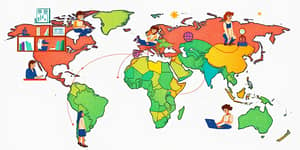
While Europe and high-income East Asia crown the rankings of oldest societies—with Japan already at 30% aged 60+—regions such as sub-Saharan Africa, South Asia, and parts of the Middle East remain dominated by youth. This divergence creates two parallel worlds: one grappling with slower population growth and aging workforces, the other poised for rapid expansion of young labor pools.
- Europe, North America, and East Asia: Declining fertility and extended lifespans driving up old-age dependency ratios.
- Sub-Saharan Africa and South Asia: High birth rates sustaining large youth cohorts entering the workforce.
Economic Implications: Challenges and Opportunities
An aging population often implies a shrinking share of working-age individuals (15–64). In many developed economies, the working-age ratio has fallen from roughly 67% in the late twentieth century to 63% today, with projections of 57% by 2075. This rise in old-age dependency ratios can strain pension systems, healthcare budgets, and reduce per-capita economic growth.
However, new analyses suggest that aging can be reframed as an economic asset. The rise of the silver economy—markets and services catering to older adults—offers an opportunity to offset much of the demographic drag. An IMF study estimates that effective targeted policies around older workers could boost global growth by 0.6 percentage points over 2025–2050, offsetting up to three-quarters of potential losses.
- Health and wellness industries targeting older adults
- Assistive technologies and age-friendly housing
- Financial products for longevity and retirement
- Education, travel, and leisure services for seniors
Projected Growth of Older Populations
To illustrate the speed of aging, consider these global projections for 2020 versus 2050:
Health, Care, and Social Dimensions
As populations age, healthcare systems must adapt to rising prevalence of chronic conditions, frailty, and cognitive decline. The World Health Organization underscores the need for integrated health and long-term care models to meet complex needs, from community-based prevention to advanced geriatric services.
Policymakers are exploring innovations such as telemedicine, home-based care, and robotics to support older adults. Ensuring equitable access, fostering age-friendly urban design, and training specialized caregivers are critical steps to maintain quality of life and contain costs.
Harnessing Youth Waves for Growth
In contrast, youthful regions hold the promise of a demographic dividend if they can integrate young entrants into productive roles. Investments in education, vocational training, and digital infrastructure are vital to transform a large youth population into an engine of growth rather than a social burden.
- Expand quality education and skills development programs
- Enhance access to technology and digital platforms
- Promote entrepreneurship and small enterprise financing
Strategies for a Balanced Future
To navigate the complexities of global demographic change, stakeholders must adopt a holistic approach. Countries with aging populations can harness older adults’ wisdom by leveraging older workers’ experience and knowledge, encouraging flexible retirement policies, and promoting lifelong learning. Simultaneously, youthful nations should build robust educational systems, foster inclusive labor markets, and strengthen social protections.
International cooperation can facilitate cross-border labor mobility, knowledge exchange, and best-practice diffusion. By aligning healthcare innovation, economic policy, and social planning with demographic realities, the world can convert challenges into opportunities, ensuring prosperity and well-being for all generations.
References
- https://ageing-better.org.uk/our-ageing-population-state-ageing-2025
- https://www.who.int/news-room/fact-sheets/detail/ageing-and-health
- https://www.weforum.org/stories/2025/10/healthy-ageing-are-we-on-track/
- https://www.who.int/news-room/questions-and-answers/item/population-ageing
- https://pmc.ncbi.nlm.nih.gov/articles/PMC11986089/
- https://www.goldmansachs.com/insights/articles/aging-population-not-a-risk-to-the-global-economy-after-all
- https://www.visualcapitalist.com/global-senior-population-forecasts-2025-vs-2050p/
- https://www.un.org/en/global-issues/ageing
- https://www.census.gov/topics/population/older-aging.html