
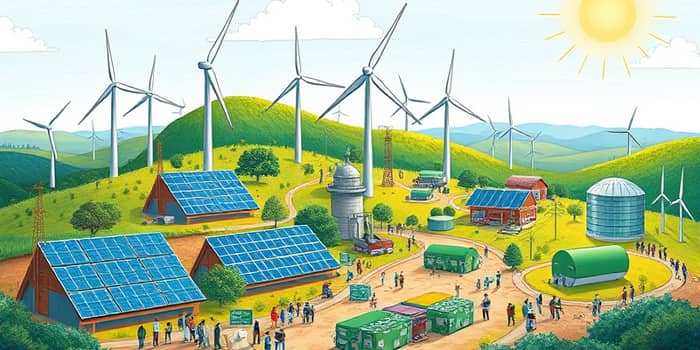
The 21st century demands a reimagined approach to growth—one that harmonizes economic expansion with environmental stewardship. As we confront climate change, biodiversity loss, and persistent inequality, projected global growth for 2025 hovers at just 3.0%, the slowest five-year outlook in decades. Yet within this challenge lies an opportunity: by channeling capital and innovation into green solutions, we can foster resilient economies and a healthier planet.
The Global Economic and SDG Backdrop
Amid geopolitical tensions and policy unpredictability, global inflation is expected to ease to between 4.4% and 4.5% in 2025. Governments are under pressure to rebuild trust through credibility, predictability, and sustainability, reinvigorating confidence in markets and communities alike.
Progress toward the Sustainable Development Goals (SDGs) is uneven. Alarmingly, only 17% of SDG targets are on course for achievement by 2030. Advances in electricity access, digital connectivity, maternal health, and disease control demonstrate what is possible. Yet significant gaps in climate action, biodiversity protection, poverty alleviation, hunger eradication, and equitable healthcare persist, underscoring the urgency of collective mobilization.
Surge in Global Green Investment and Technological Innovation
Clean energy technology spending is poised to reach $670 billion in 2025, spanning renewable power, energy storage, green hydrogen, and carbon capture. This massive flow of capital signals a paradigm shift: from fossil fuels toward low-carbon alternatives.
In the United States, Q2 2025 saw $68 billion in clean investment—bringing the four-quarter total to $276 billion. Highlights include 4 million zero-emission vehicles registered, 22 million heat pumps sold since 2018, and 4.5 million distributed energy systems installed.
- Renewable power generation
- Long-duration energy storage
- Carbon capture and storage facilities
- Green hydrogen production and transport
- Circular economy initiatives
These trends coincide with a robust venture capital landscape: climate tech ranks among the top three funding categories globally in 2025. Investors recognize that companies with strong ESG practices yield 12.9% annual returns, outpacing traditional peers at 8.6%.
Market Drivers: Policy, Corporate, and Consumer Shifts
Regulatory frameworks are critical. Subsidies, tax incentives, and clear decarbonization targets have spurred private capital toward sustainable sectors. Policymakers must maintain policy predictability remains key to avoid stalling progress.
On the corporate front, early adopters of energy-efficiency measures report up to 60% lower operating costs and 10–30% utility savings. Consumers play a decisive role as well—90% now trust brands that champion environmental responsibility, accelerating demand for green products and services.
Regional Successes and Persistent Gaps
Progress varies by region. East and South Asia lead the SDG race, with China and India among the top 100 performers. Europe boasts 19 of the top 20 SDG ranks, led by Finland. The United States drives record levels of clean investment and job creation. Meanwhile, countries in Africa, Latin America, and the Middle East are emerging as sustainability contenders through targeted reforms and international partnerships.
Challenges and the Path Forward
Despite record investments, the world remains off pace to meet the Paris Agreement’s renewable capacity targets. Inequities in service access and economic opportunity exacerbate climate risk for vulnerable populations. Persistent obstacles include high upfront costs and uncertainties, regulatory fragmentation, and infrastructure deficits in developing markets.
Technology gaps are equally daunting: roughly 35% of required CO₂ reductions depend on innovations not yet commercialized. This reality underscores the need to intensify research and development, boosting today’s prototypes into tomorrow’s solutions.
Strategic Calls to Action
- Accelerate SDG-aligned investments in food, energy, and digital access
- Strengthen public-private partnerships to catalyze innovation through targeted partnerships
- Bridge finance and infrastructure gaps in vulnerable communities
- Enhance transparency through rigorous reporting and benchmarks
Conclusion: Toward Equitable and Sustainable Prosperity
The transition to a greener global economy is both a moral imperative and a potent engine for growth. By aligning policy, finance, and innovation, we can close the gap between ambition and action. The road ahead demands unwavering commitment to public-private collaboration at scale, inclusive financing models, and a steadfast focus on environmental stewardship.
As investors, policymakers, businesses, and citizens, we hold the key to shaping a future where prosperity and planet thrive in harmony. We must seize this moment—deploy capital wisely, champion breakthrough technologies, and ensure that no community is left behind. Only then can we fulfill the promise of a truly sustainable and equitable global economy.
References
- https://unstats.un.org/sdgs/report/2025/
- https://www.thegreenshot.io/uncategorized/future-of-green-technology/
- https://www.imf.org/en/Publications/WEO
- https://www.cleaninvestmentmonitor.org
- https://sdgtransformationcenter.org/reports/sustainable-development-report-2025
- https://www.visualcapitalist.com/sp/hf07-sustainable-trade-index-2025/
- https://about.bnef.com/insights/clean-energy/record-renewable-energy-investment-in-2025-three-things-to-know/
- https://dashboards.sdgindex.org/rankings/
- https://www.deloitte.com/us/en/insights/industry/renewable-energy/renewable-energy-industry-outlook.html
- https://storm4.com/resources/industry-insights/green-technology-startups/
- https://www.oecd.org/en/about/news/press-releases/2025/09/global-economic-outlook-weakens-as-policy-uncertainty-weighs-on-demand.html
- https://electroiq.com/stats/green-tech-statistics/
- https://www.nature.com/articles/s41467-025-64219-y
- https://researchfdi.com/green-technology-economic-growth/